
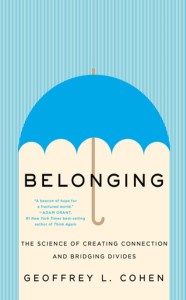
We live in hugely divisive times. Them vs. Us cultures are on the rise, there has been growth in hate crimes, and, despite being more connected than ever before (with thanks to technology), one in five Americans suffer from chronic loneliness, it is no wonder people feel more alienated than ever!
To show how we can bridge these divides and create connection, Standford University Professor, Geoffrey L. Cohen, applies his and other’s research to the myriad problems of communal existence and offers concrete solutions for improving daily life.
Many of us have heard of Maslow’s hierarchy of needs, which highlights the importance of a sense of belonging to humans. Despite living in what feels like fractured times, Cohen uses science to show how we can establish connection as well as the ripple effects this can have on our entire society.
Belonging is the most academic piece of literature I’ve read since finishing my Sociology degree four and a half years ago. Whilst it was different from my usual, crime fiction reads, it was incredibly insightful and informative, and even made me miss studying!
Filled with statistics, studies, and anecdotes this book looks at our sense of belonging within society and the impact that has in a vast number of areas including school, work, policing, politics, and health. It is evident the effect sense of belonging, or lack of it, has on society as the studies show the increased/decreased potential, well-being, and outcomes for individuals, depending on whether they feel alienated.
As well as showing us the impact of whether you feel like you belong, Geoffrey Cohen also offers us practical advice on how we can foster a sense of belonging; showing us that even just the smallest acts, such as a change in language, can validate people’s sense of belonging. Knowing that there is stuff we can all do, was inspiring leaving me thinking how I can incorporate some of these things in my own life. It also offered a lot of hope- suggesting that we don’t need to feel alone, there is another way.
Overall, a very insightful read, teachers and managers would really benefit from reading this, but really any one of us can take something from it and take responsibility for fostering a culture where we feel like we all belong. Five Stars.

 Reads Must